


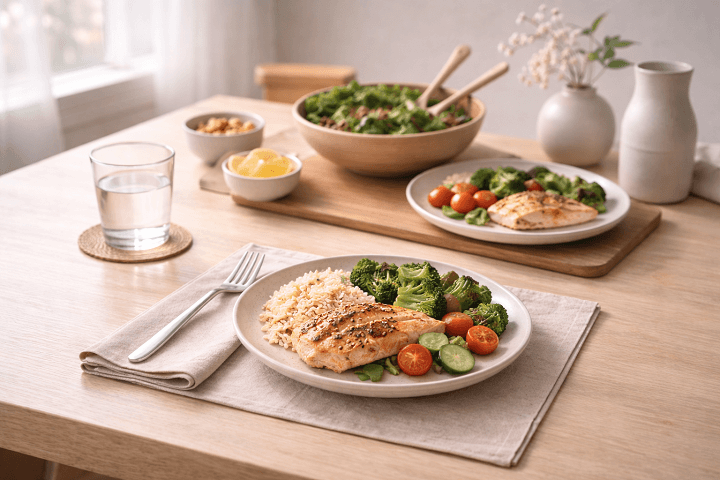
Balanced eating doesn’t need calculations or rules. Learn how routine, timing, and familiarity create everyday balance naturally.
Balanced eating is often associated with tracking, measuring, or constant decision-making. In reality, balance usually comes from routine rather than control. When eating patterns are familiar, balance happens naturally over time.
Balanced eating doesn’t mean every meal looks the same. It means your overall routine feels steady and manageable.
Balanced Eating and Daily Structure
Structure plays a key role in balanced eating. Regular meals and snacks reduce extremes and make food decisions easier. When structure exists, balance becomes less intentional and more automatic.
Structure doesn’t eliminate flexibility. It simply provides a stable base.
What Balanced Eating Looks Like
Balanced eating varies from person to person. It often includes familiar foods, consistent timing, and mindful pacing.
Key elements include:
-
Regular meals
-
Planned snacks
-
Comfortable portions
These elements support balance without requiring strict planning.
Balanced Eating in Real Life
Real life includes busy days, social meals, and changes in routine. Balanced eating allows for these variations without judgment. Returning to familiar patterns restores balance naturally.
Balance is built across days, not individual meals.
Keeping Balanced Eating Sustainable
Sustainability comes from simplicity. When balanced eating feels easy, it becomes part of daily life rather than a goal.
ForgottenSnacks reflects this mindset by focusing on everyday food experiences rather than extremes.
Balanced eating doesn’t need attention every day. When routine supports it, balance becomes something you live, not something you manage.