


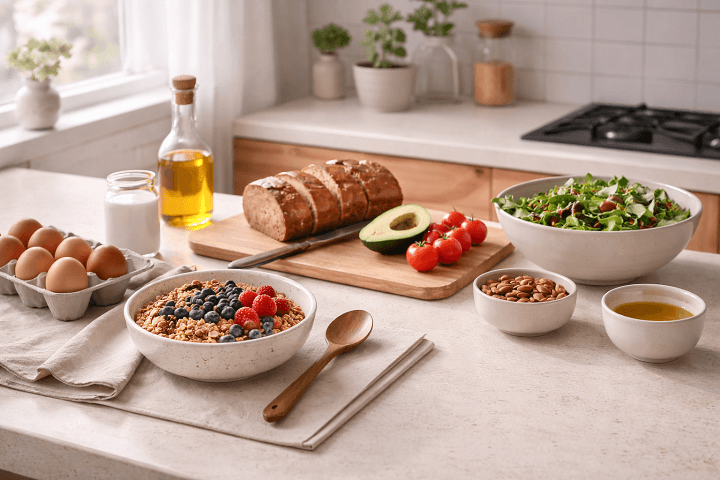
Food habits are shaped by routine, not motivation. Learn how everyday patterns influence how and when you eat without pressure or extremes.
Food habits are rarely formed by big decisions. They develop quietly through repetition, timing, and convenience. What you eat daily is often influenced more by routine than intention, which is why small adjustments can make a lasting difference.
Instead of focusing on dramatic changes, building food habits works best when aligned with your natural schedule. When habits feel familiar, they require less effort to maintain.
Food Habits and Routine
Food habits thrive on predictability. Eating around similar times each day helps create structure and reduces impulsive decisions. This structure allows food to fit smoothly into daily life instead of becoming a constant choice.
Routine doesn’t mean rigidity. It simply provides a framework that supports consistency.
How Food Habits Form
Food habits form through repeated actions rather than rules. Over time, your body and mind adapt to patterns.
Common habit-building elements include:
-
Keeping food accessible
-
Repeating simple choices
-
Eating without distraction when possible
These elements make habits easier to follow without conscious effort.
Food Habits and Balance
Balanced food habits are flexible. Some days follow routine closely, others don’t. Balance comes from returning to familiar patterns without guilt.
Food habits also influence how food feels emotionally. When eating is predictable, it becomes calmer and less reactive.
Maintaining Food Habits Long-Term
Long-term food habits should evolve with life changes. Travel, work shifts, and social events all affect routine. Adaptation is part of sustainability.
ForgottenSnacks aligns with this thinking by focusing on everyday food choices that suit modern lifestyles rather than idealized routines.
Food habits don’t need to be perfect to be effective. When habits are simple and repeatable, they quietly support balance day after day.